





"Quittoking" refers to the act of filming, staging and sharing on social media, particularly TikTok, the moment of one's resignation or the story surrounding it.
This phenomenon reflects a deeper disengagement among employees and a growing demand for transparency from employers, against a backdrop of distrust towards traditional internal channels.
In Luxembourg, the legal framework for resignation remains strict, and recruiters are increasingly scrutinising candidates' online reputation, which makes the practice of "quittoking" particularly risky for the rest of a career.
For a long time, resigning was a discreet matter, sometimes tense, but confined to the HR manager's office. This boundary between professional and private life is gradually fading with the emergence of "quittoking", this new portmanteau word that describes the art of filming one's resignation and posting it on social media.
Having emerged in the UK before spreading to the US, the phenomenon is now reaching Europe, and France in particular, as pointed out in an analysis published on The Conversation, written by Elodie Gentina, professor at IESEG School of Management. For the researcher, this trend "reflects a profound transformation of professional relationships in an environment where every individual can make their work experience public".
The hashtag #quittok now has tens of millions of views, and some resignation videos reach audience levels within days that are comparable to national media campaigns. A standout case illustrates this shift: in the UK, a collective resignation filmed inside a McDonald's restaurant generated more than 16 million views within hours, while in the US, several Amazon employees also publicised their departures by openly criticising their working conditions, as detailed in an article on the Mediavenir website dedicated to this phenomenon.
Elodie Gentina explains that "examining the statements made by employees on TikTok, LinkedIn or Reddit reveals recurring patterns": workload overload, lack of recognition, management practices seen as inadequate, and a loss of meaning. According to her, "in the absence of internal channels seen as effective, some employees take their experiences into the public sphere to challenge organisations directly".
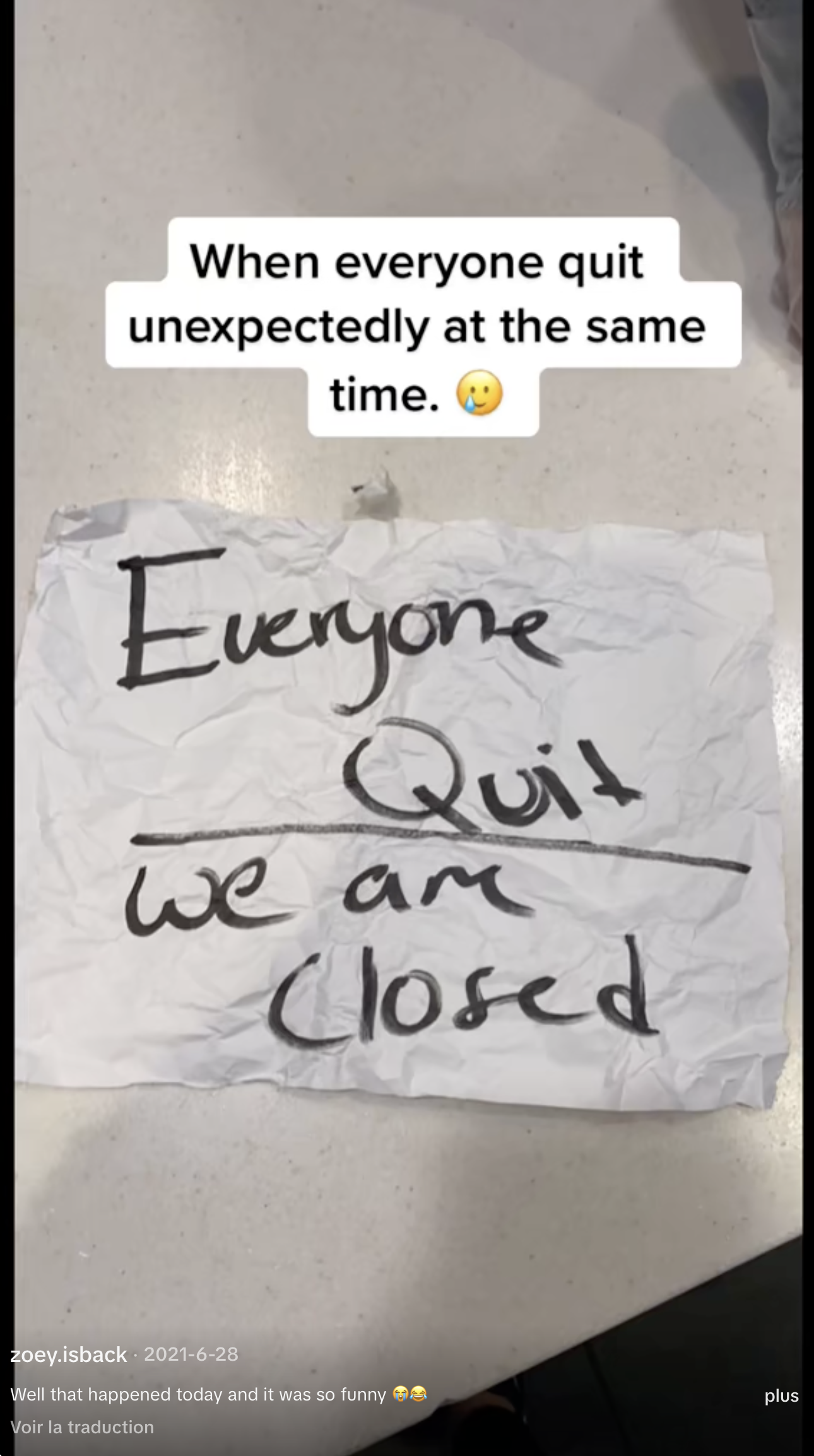
While quittoking reflects a shift in the balance of power between employers and employees, there is no guarantee that it comes without consequences for those who engage in it. The IESEG researcher points out that, in a job market marked by digital hypervisibility, publicising one's resignation can "reinforce an image of authenticity and generate empathy", but can also be "seen by some recruiters as a sign of conflict or a lack of professional discretion", especially now that employers routinely check social media as part of their hiring process.
This vigilance among recruiters is not unique to France or the UK. In Luxembourg, an article published by Paperjam points out that checking a candidate's online profile serves as a first point of contact between an employer and a candidate, and that recruiters rely on this information to carry out more detailed screening, sometimes combined with a "background check". In a job market as tight and international as the Grand Duchy's, a viral resignation video does not simply disappear, and can follow a candidate long after they have left a company.
"Quittoking is not an anomaly, but the symptom of a structural shift in the relationship to work.”
Beyond the question of image, quittoking also raises legal questions. In Luxembourg, labour law strictly regulates the terms under which an employee can leave a company. According to information published by the Labour and Mines Inspectorate (ITM), a resignation must result from a clear, considered and unequivocal decision by the employee, who must notify it by registered letter or by handing it over in person against signature: a verbal resignation, and even more so a resignation filmed for social media without this written formalisation, is generally not recognised as valid.
The Guichet.lu portal further states that the employee must observe a notice period whose length depends on their seniority at the company, and that this resignation becomes irrevocable once notified, unless the employer agrees otherwise. Staging one's departure on TikTok therefore changes nothing about the contractual obligations that remain in place, and may even strain the relationship with an employer who discovers that internal company information has been made public, particularly in cases where contracts include confidentiality or loyalty clauses.
Beyond its spectacular side, quittoking is not simply a passing social media trend. For Elodie Gentina, "quittoking is not an anomaly, but the symptom of a structural shift in the relationship to work", one that reveals a deeper disengagement among employees and a growing demand for consistency between what companies say and what their employees actually experience day to day.
The researcher adds that "in a context where everything can become public, companies can no longer hide", and can therefore no longer afford to ignore early warning signs of disengagement before they are expressed, sometimes loudly, in the public digital sphere.
For HR departments, whether in Luxembourg or elsewhere, the challenge is therefore to strengthen internal listening channels, to handle departures with as much care as recruitment, and to anticipate the reputational risk that a poorly handled resignation can represent.
For employees tempted to stage their departure for viral effect, caution is advised: in a job market as internationalised and concentrated as Luxembourg's, a quittoking video may win over an audience, but it can also jeopardise a future job application.




.jpg)
.jpg)