



A successful football team relies on a clear distribution of roles, a principle directly applicable to workplace organisation.
Stress and recovery management, essential for enduring a competition lasting several weeks, echoes wellbeing challenges in the Luxembourg workplace.
Team spirit and communication, decisive both on the pitch and in the office, remain underused levers in many Luxembourg organisations.
With its twelve groups of four teams and its unprecedented format including a round of 32, this 2026 edition of the World cup, hosted in Canada, the United States and Mexico, is being played as much on endurance as on individual talent.
A parallel naturally emerges with the world of work, where lasting performance relies less on isolated flashes of brilliance than on solid collective organisation. Without falling into the managerial cliche of "all united behind the coach", several principles of professional football are worth examining closely by employees seeking greater effectiveness.
In football, a defender does not play in the striker's position, and vice versa. This tactical truism nonetheless conceals an organisational reality often overlooked in companies: clarity of roles is a key factor in collective performance. When responsibilities are unclear, work teams either duplicate effort or, conversely, leave tasks unassigned, much like a midfielder caught hesitating between covering defence and supporting the attack.
In Luxembourg, where teams are frequently multicultural and where nearly 47% of employees are cross-border workers according to STATEC data, this clarity becomes even more strategic. Differences in management practices depending on professional background, French, Belgian, German or Luxembourgish, make it essential to clearly define each person's scope as soon as they join a team.
A World cup is played over five weeks, with matches every three or four days for teams that progress through the competition. National coaches therefore think in terms of long-term effort management, alternating player rotation, recovery sessions and tactical adjustments to avoid running out of resources by the final stages.
This logic of endurance echoes the reality of the Luxembourg labour market rather starkly. The Quality of Work Index 2025, published by the Chambre des salariés in partnership with the University of Luxembourg, shows that the burnout indicator reached 40.9 points, up from 33.7 the previous year, now affecting 36% of respondents.
Just as a coach saves their best players during the group stage to target the knockout rounds, companies need to support employees in better managing their energy on long-term projects, rather than giving everything from the outset only to collapse before the final deadline.
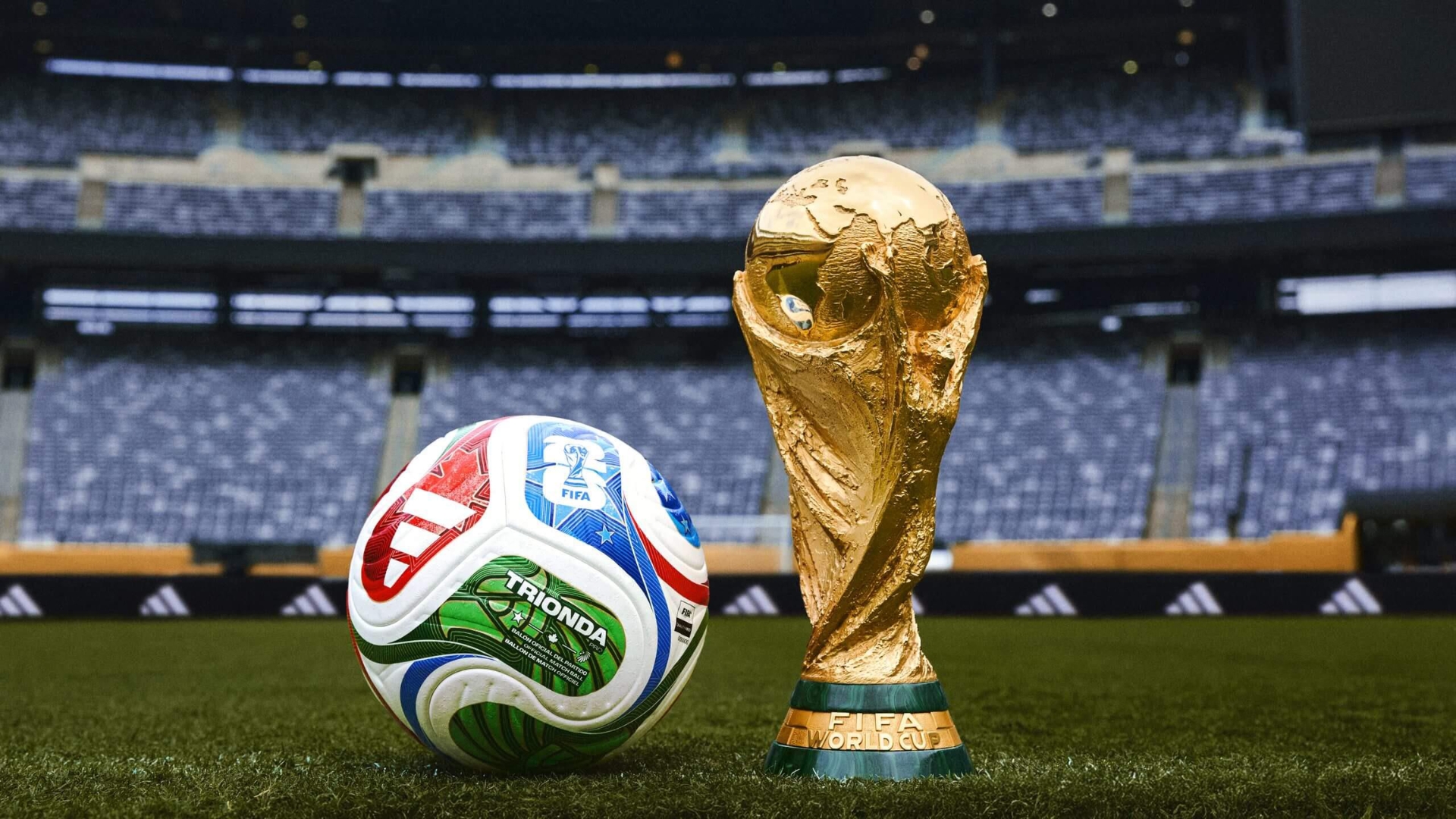
Modern football has definitively buried the myth of the providential player capable of carrying a team alone throughout a competition. The strongest squads in this 2026 edition rely on team cohesion, communication on the pitch and mutual trust far more than on accumulating individual stars, a lesson many professional organisations still struggle to fully embrace.
This collective dimension directly echoes the recommendations of David Büchel, occupational psychologist and adviser to the Chambre des salariés, who points out in an article from Les Frontaliers that the quality of work rests on a balance between the resources that motivate employees, such as feedback or participation in decisions, and the demands placed on them.
In a context where the lack of remote work proves particularly detrimental for cross-border workers, who spend an average of 9.6 hours per week commuting compared to 5.5 hours for residents according to the same study, strengthening communication and team solidarity becomes an accessible and low-cost lever for reducing professional isolation.
Beyond the sporting metaphor, a few concrete habits from top-level football are worth testing at the office. The post-match debrief, a systematic practice among professionals for identifying areas for improvement without waiting months, can inspire shorter, more frequent team check-ins rather than a single annual review. Mental preparation before an important match, which involves visualising scenarios and structuring focus, applies just as well before a client meeting or a strategic presentation.
Finally, the notion of the substitutes' bench, often viewed negatively in companies even though it corresponds to a necessary recovery phase in sport, deserves rehabilitation. Knowing when to ease off during certain periods in order to perform better afterwards is not an admission of weakness, but a recognised strategy at the highest level of both sport and professional life.
The parallel between football and the world of work obviously has its limits, one relying on immediate physical performance, the other on much longer and more complex dynamics.
But the collective philosophy that structures a national team during a World cup, built around values such as clarity of roles, effort management and group cohesion, remains a relevant source of inspiration for employees and managers in Luxembourg facing a strained professional environment. In a market where workplace wellbeing is going through a difficult period, drawing inspiration from the pitch to better structure daily professional life is far from anecdotal.




.png)