



The Chamber of Employees' Quality of Work Index 2025 shows a rising burnout indicator, affecting 36% of respondents.
Burnout has no specific diagnostic code in Luxembourg and is not recognised as an occupational disease, but sick leave is covered by the CNS.
Preventing psychosocial risks relies on work organisation and on the employer's health and safety obligation.
Burnout, or professional exhaustion, is a state of physical and mental exhaustion linked to chronic stress at work. In Luxembourg, the issue is gaining prominence in public debate as surveys on quality of life at work point to a deterioration.
For employees, whether residents or cross-border workers, the question is twofold: how is burnout in Luxembourg taken into account by the law and the healthcare system, and what options exist to protect against it? This article draws on data from the Chamber of Employees, information from the Ministry of Health and resources from the Labour and Mines Inspectorate.
According to the latest Quality of Work Index, produced by the Chamber of Employees (CSL) with the University of Luxembourg and Infas, the overall quality of life at work indicator falls to 53.4 points out of 100 in 2025, its lowest level since the survey began in 2014. For burnout in Luxembourg, the indicator reaches 40.9 points compared with 33.7 in 2024 and affects 36% of respondents, while the high risk of depression concerns 15% of employees.
The president of the CSL, Nora Back, sums up the situation in an article published on Les Frontaliers: "Working conditions are making them ill, and we need to understand why". David Büchel, occupational psychologist and adviser to the CSL management, explains for his part that the quality of work depends on the balance between resources (feedback, participation in decisions, training) and demands (mental load, conflicts between private and professional life, emotional pressure).
Not all employees are affected in the same way. The lowest satisfaction levels are observed among women, single parents, 25-34 year-olds and employees in physically demanding jobs, with French cross-border workers also among the most affected groups. Remote working appears to be a protective factor, with a score of 56.7 points for employees who use it regularly, compared with 51.9 for those who work exclusively on site.
Despite these signals, burnout in Luxembourg has no specific status. In a parliamentary answer to MP Nathalie Morgenthaler, reported by Paperjam, the Minister of Health and Social Security, Martine Deprez, stated that the country has no diagnostic code specific to burnout. Cases are recorded under the broader category of depression, which makes it impossible to measure the phenomenon precisely.
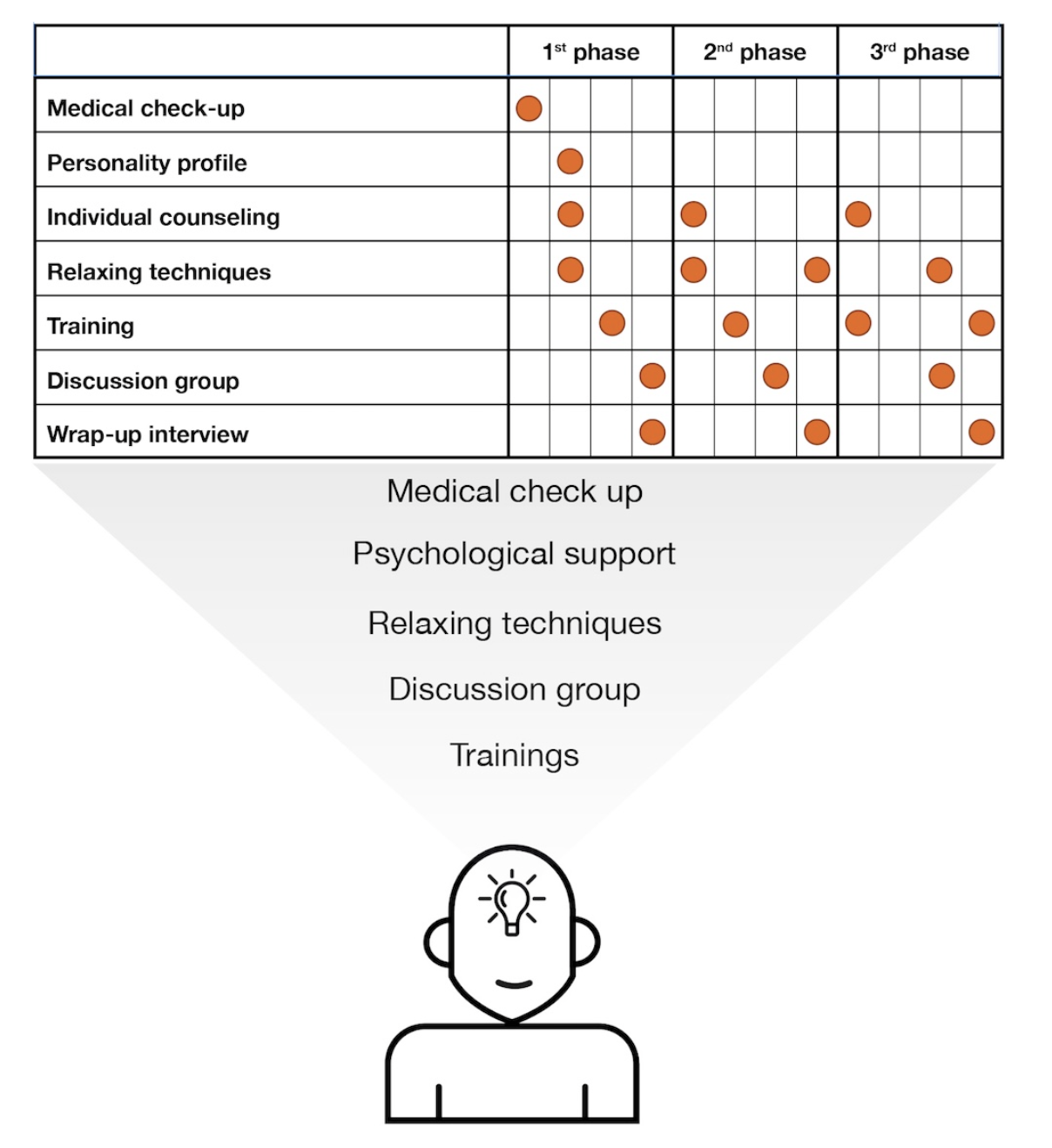
The government does not intend to recognise this syndrome as an occupational disease, as the minister considers that the International Classification of Diseases (ICD-10 and ICD-11) already offers enough categories to cover the symptoms. For the time being, no national study is planned, but the Lighthouse pilot programme, run by the ASTF with the support of the Ministry of Health, supported 35 people in 2024 through medical and psychological follow-up and sophrology sessions. Sick leave related to burnout is still covered by the National Health Fund (Caisse nationale de santé, CNS).
On the prevention side, the Labour and Mines Inspectorate (ITM) points out that psychosocial risks are defined neither legally nor statistically in Luxembourg, with stress being only one manifestation. In its 2024 activity report, the administration notes that these risks, including burnout, stress and isolation, are growing in importance and says it intends to develop its skills in mental health at work.
In case of exhaustion, the first step is to consult a doctor, who can issue a certificate of incapacity for work as for any other illness. A gradual return to work for therapeutic reasons is possible. The employee must have been unfit for work for at least one month in the three months preceding the request and obtain the prior agreement of the CNS, based on an opinion from the Medical Control, according to the same brochure. In the event of professional reclassification, internal or external, the right to sickness benefit ends on the day the joint committee's decision is notified, states the CNS.
To avoid reaching that point, the CSL considers that work organisation is the main lever for prevention, as stress, harassment, violence, exhaustion and addictive behaviours often share the same factors. An employee facing an excessive workload can discuss it with their employer, whose general health and safety obligation also covers mental health, and then turn to the ITM if the situation does not improve.
With rising indicators, no diagnostic code and limited recognition, burnout in Luxembourg remains difficult to measure, but its effects on employees are documented. Mechanisms exist to receive treatment, compensation and support during the return to work.
Prevention depends above all on work organisation, workload and dialogue with the employer, making it a shared challenge for employees, companies and institutions.
Is burnout recognised as an occupational disease in Luxembourg?
No. According to the Minister of Health, there is no specific diagnostic code and no recognition is planned. Sick leave related to burnout is nevertheless covered by the CNS.
Is sick leave possible in case of burnout?
Yes, the doctor issues a certificate of incapacity for work as for any other illness. The employer maintains the salary up to the 77th day, then the CNS takes over for up to 78 weeks.
Who should I turn to in case of excessive workload?
A doctor remains the first point of contact in case of symptoms. Employees can also alert their employer, contact the CSL or approach the ITM, which is responsible for psychosocial risks.


.jpg)